| HAROULA · NEW HAROULA HOTEL SANTORINI island |
|
|
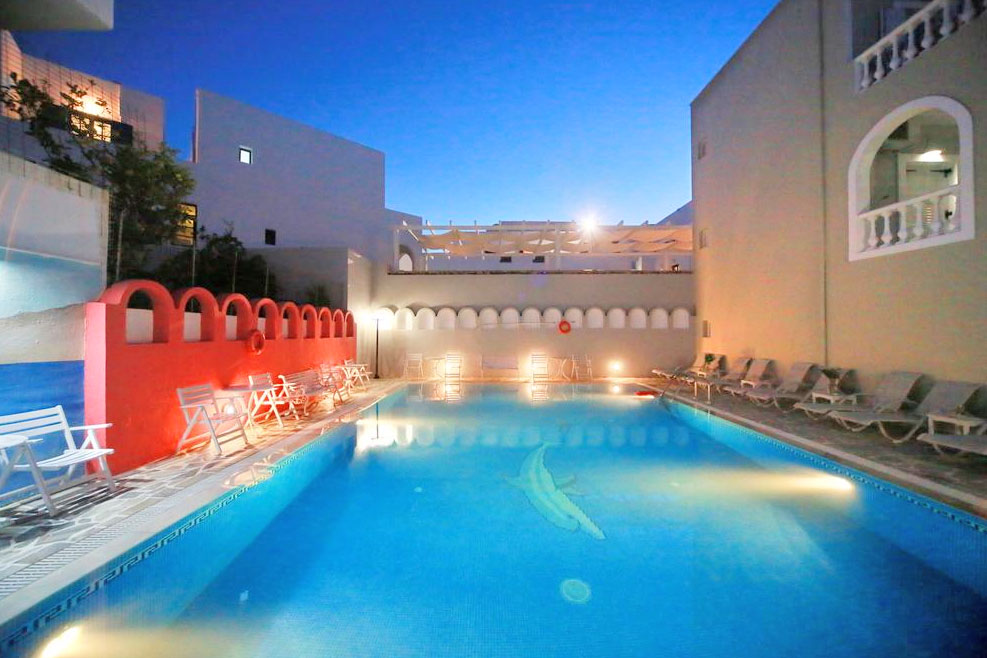
Fira Santorini HOTELS - Greece

NEW XAROULA
2 STARS HOTELS
SANTORINI GREECE |
Location: 84700, Fira Santorini
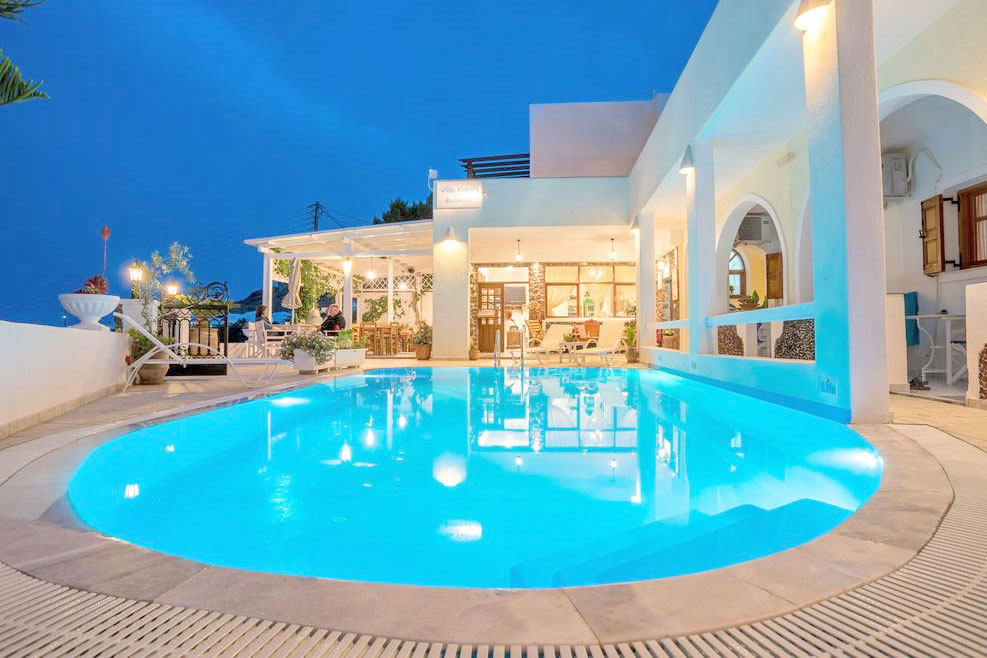
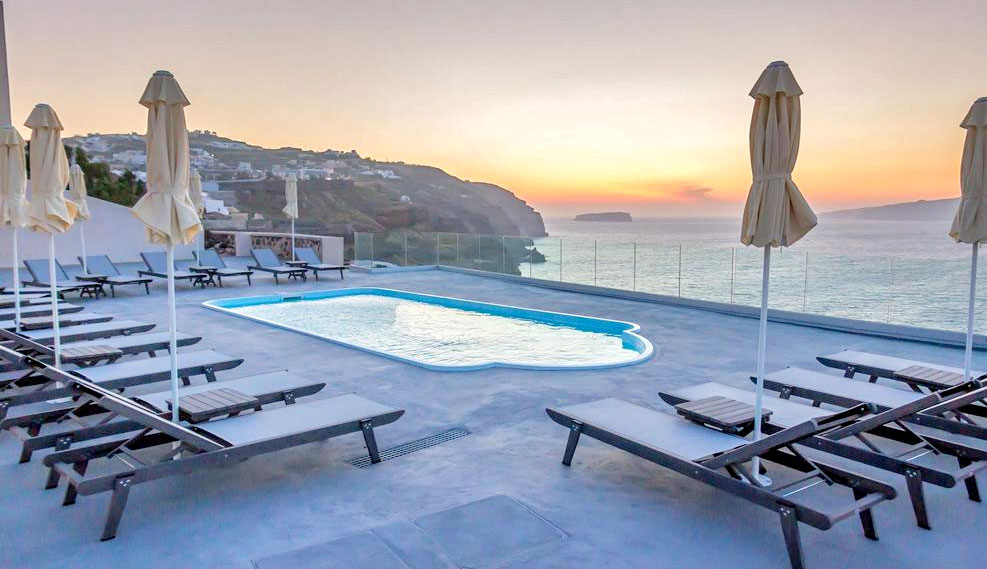
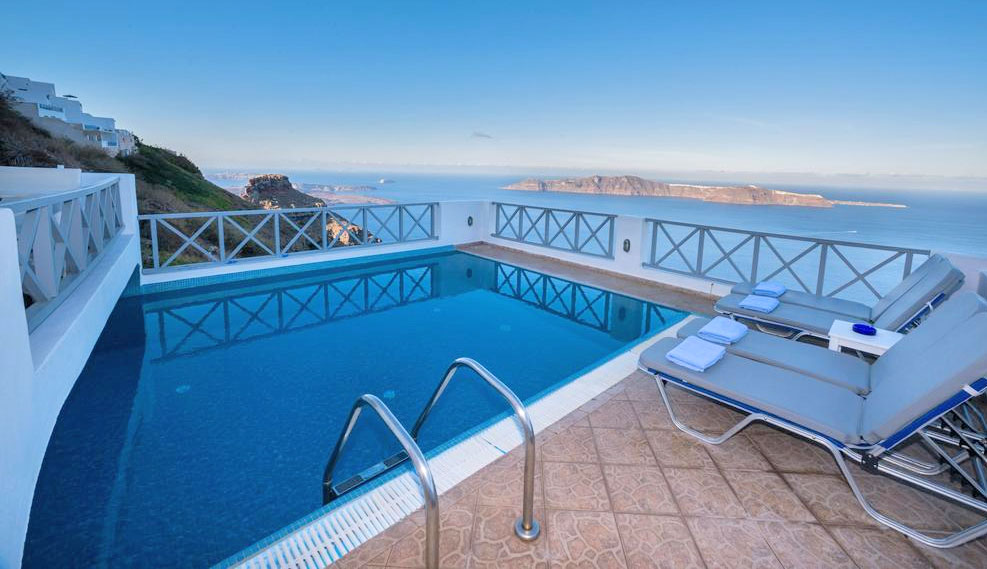
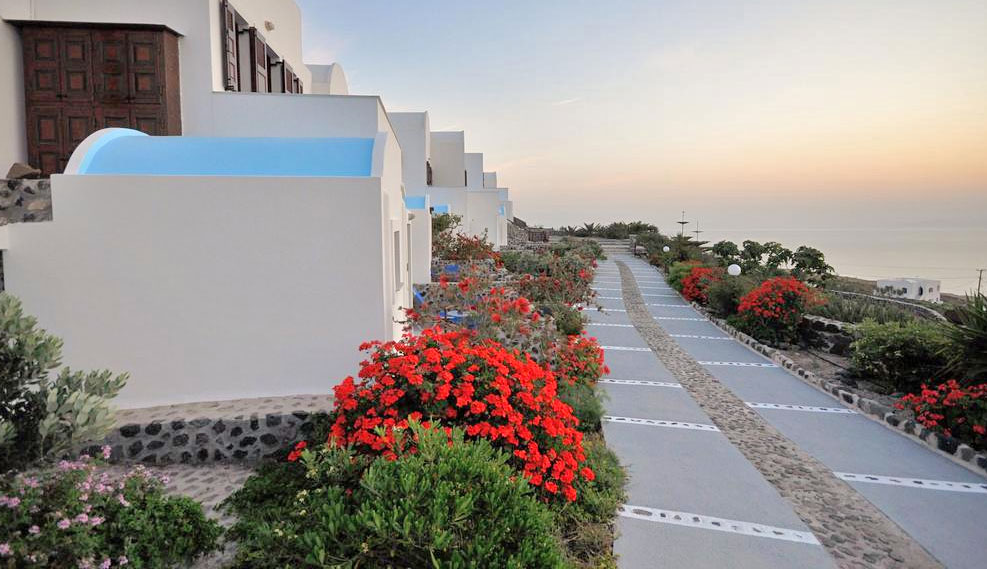
New Haroula Hotel invites you to experience the wild beauty of Santorini. In traditional environment of our hotel, let us overwhelm you with a level of service and hospitality.Located 100m from Santorini City Center you have everything near by you.
|
tel.: +30 2286024226 · Fax: +30 2286025481
e-mail: xaroula@otenet.gr · site: www.Haroulahotel.gr |
|
|
| SΙGALAS HOTEL SANTORINI island, GReece |
|
|
Kamari Santorini HOTELS - Greece

SIGALAS HOTEL
1 STAR HOTELS
SANTORINI GREECE |
Location: 84700, Kamari Santorini
Hotel Sigalas is situated directly on the beach of Kamari,
400m from the center of the village ...
|
tel: +30 22860 31260 · Fax: +30 22860 31480
|
|
|
| MEDITERRANEAN ROYAL HOTELS SANTORINI island |
|
|
Vothonas Santorini HOTELS - Greece

MED/NEAN ROYAL
5 STARS HOTELS SANTORINI GREECE |
Location: 84700, Vothonas Santorini
|
| tel: +30 22860 27102 · site: www.medhotel.gr |
|
|
| KASTELLI RESORT HOTELS SANTORINI, GReece |
|
|
Kamari Santorini HOTELS - Greece

KASTELLI RESORT
5 STARS HOTELS SANTORINI GREECE |
Location: 84700, Kamari Santorini
|
| tel: +30 22860 31530 · site: www.kastelliresort.com |
|
|
| VEDEMA HOTELS SANTORINI island, GReece |
|
|
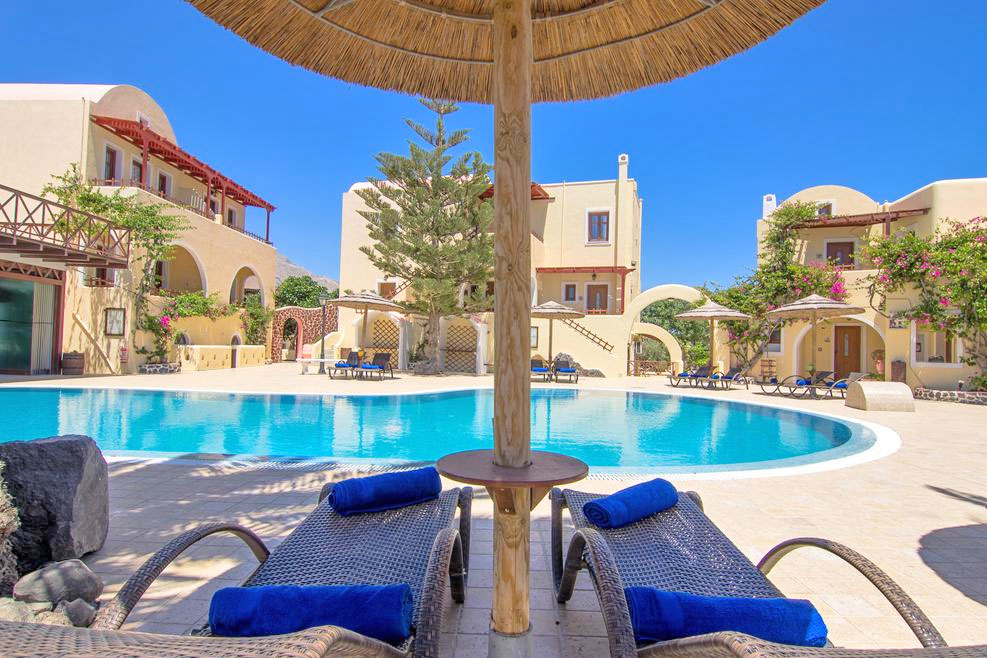
Megalohori Santorini HOTELS - Greece

VEDEMA HOTEL
4 STARS HOTELS SANTORINI GREECE |
Location: 84700, Megalohori Santorini
|
| tel: +30 22860 81796 · site: www.vedema.gr |
|
|
| ARIA BOUTIQUE HOTEL SANTORINI island, GReece |
|
|
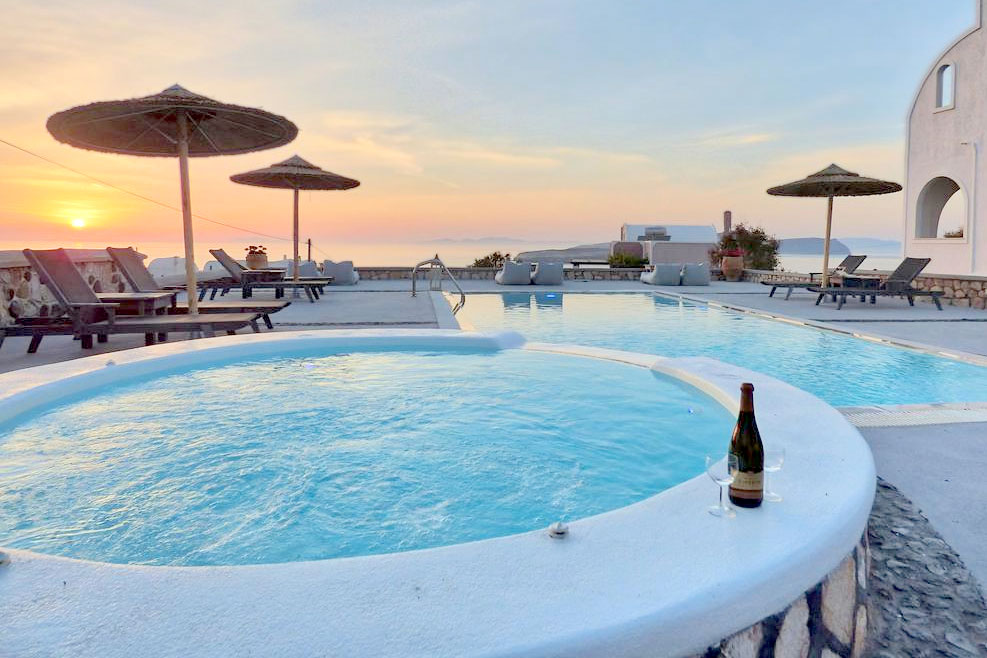
Fira Santorini HOTELS - Greece

ARIA BOUTIQUE
4 STARS HOTELS SANTORINI GREECE |
Location: 84700, Fira Santorini
|
| tel: +30 22860 41276 · site: www.ariafolegandros.gr |
|
|
| ATLANTIS HOTEL SANTORINI island, GReece |
|
|
Fira Santorini HOTELS - Greece

ATLANTIS HOTEL
4 STARS HOTELS SANTORINI GREECE |
Location: 84700, Fira Santorini
|
| tel: +30 22860 22232 · site: www.atlantishotel.gr |
|
|
| KOUROS VILLAGE HOTEL SANTORINI island, GReece |
|
|
Perissa Santorini HOTELS - Greece

KOUROS VILLAGE
SANTORINI
HOTEL , GREECE |
Location: 84700, Perissa Santorini
|
| tel: +30 22860 81972 · site: www.kouros-village.com |
|
|
| MAJESTIC HOTEL SANTORINI island, GReece |
|
|
Fira Santorini HOTELS - Greece

MAJESTIC
SANTORINI
HOTEL , GREECE |
Location: 84700, Fira Santorini
|
| tel: +30 22860 25972 · site: www.hotel-majestic.gr |
|
|
| KROKOS HOTELS SANTORINI island, GReece |
|
|
Imerovigli Santorini HOTELS - Greece

KROKOS
SANTORINI
HOTEL , GREECE |
Location: 84700, Imerovigli Santorini
|
| tel: +30 22860 22488 · site: www.krokosvillas.com |
|
|
|
|
| |
|
| |
Other Hotels in Santorini, Greece:
|
| KATIKIES HOTEL SANTORINI island, GReece |
|
|
Oia Santorini HOTELS - Greece
|
OIA HOTELS ->
SANTORINI |
Location: 84702, Oia Santorini
Τel: +30 22860 71401 |
|
| ARESSANA HOTELS SANTORINI island, GReece |
|
|
Fira Santorini HOTELS - Greece
|
HOTELS FIRA ->
SANTORINI |
Location: 84700, Fira Santorini
Τel: +30 22860 23900 |
|
| SANTORINI PALACE HOTELS SANTORINI island, GReece |
|
|
Fira Santorini HOTELS - Greece
|
FIRA HOTELS ->
SANTORINI |
Location: 84700, Fira Santorini
Τel: +30 22860 22771 |
|
| DELFINIA HOTELS SANTORINI island, GReece |
|
|
Kamari Santorini HOTELS - Greece
|
KAMARI HOTELS SANTORINI
->
|
Location: 84700, Kamari Santorini
Τel: +30 22860 33665 |
|
| PELAGOS HOTELS SANTORINI island, GReece |
|
|
Oia Santorini HOTELS - Greece
|
OIA HOTELS ->
SANTORINI |
Location: 84702, Oia Baxedes Santorini
Τel: +30 22410 24371 |
|
Other Hotels in GReece I Santorini island Hotels I Santorini Rooms & Apartments
|
HOLIDAY in
Santorini island, GReece

Sea-tossed, haughty
You erected a breast
of rock
Full from the southerly wind inspiration,
In order to engraves there the gut her grief
In order to engraves there the gut her hope
With fire with lava with smoke
With words proselytizing the infinity
You gave birth the voice of day…
ODYSSEUS ELYTIS
for Santorini Island
Enjoy your trip to
a unique island!
GReek tourist guides |
Many Thanks
for the information
to the municipality
of Santorini island
|
Local wine
The volcanic land combined with the lack of rain and the all-year-long winds on the island make the vineyard of Santorini unique all over the world. The sprout roundw around a virtual axis, keeping the plant in a low height and protecting it from winds. There are many kinds of wine coming from these unique grape varieties: The nihteri which took its name from the fact that wine growers «click» the fruit at night the Asirtiko the Aidani and the famous Vinsanto (Vino Santo), used by the catholiv church as the Holly Communion. The grape-harvets process (known here as Vedema, from the italian word) every August amd September is for the local people an annual ritual, in which participates every memeber of the family. Santorini, with unparalleled sun-dried wine, has won the "lottery" of admiration around the world. However, the rare aromas of authentic sun-dried wines of Santorini, reminiscent of honey, raisins, fig and walnut, is like the wooden doors of a mansion rarely lock. Alcohol fresh Vinsanto normally not exceed 12% by volume, while the first fragrances perceived on the first year. The two years of aging, both within the oak home, and in oblique bottle for at least 12 months, make it soa rare causing both respect and envy.
Local Arid tomatoes
The arid cherry tomatoes of Santorini is a special agricultural product with great history. The variety comes from Egypt and found in Santorini ideal environment for anhydrous developed. How protoirthe in Santorini lost in legend. Some want the tomato Santorini to protofernei a Catholic kalogeros and quickly disseminated among farmers in the island. The most likely scenario is that the tomato had the captains of Santorini transported to their ships Thiraiki land for the needs of opening up the Suez Canal. Because of anhydrous ground tomato sometimes not surpassed the size kerasiou such relish that at some point there were 10 factories producing ntomatopelte type Hunting for export. Especially in the early 20 th century Santorinio tomato was the main export product of Santorini with the Thiraiki land. This small industry destroyed by the earthquake of 1956 but not in competition antexe low yield per hectare of local tomato. Today, the tomato is a characteristic products of Santorini and has a factory pelte cooperative of Santorini, which gives hope for the future. From tomato besides pelte made pentanostimes fresh salads, but also its famous tomato-balls (tomatokeftedes).
Fava Santorinis
Fava Santorinis Fava of Santorini is one of the most important products of the island. Derived from a plant that bears the name 'peas' and in accordance with archaeological finds in the excavations of Akrotiri, grown on the island for more than 3,500 years. Sowing is in late December and harvested in June. The yield per hectare is not more than 200 kg per hectare. Below is a natural process comprising maturation of the fruit in cave stores for a year, drying in the sun, cleaning, peeling and slicing. As for plant growth, the rampant development helps to protect from the wind, while dry adaptation, allowing it to flourish in almost desert conditions. Also the possibility to capture nitrogen atmosphere allows it to cope with the lack of nutrients. The traditional methods of treatment, give the fava of Santorini authenticity and taste specificity! The characteristics of Santorini fava make it ideal dietary habits, as it helps bowel function, metabolism and neural system and controls blood sugar and cholesterol.
The particular characteristics
of Santorini fava:
•The uniqueness
of the plant from which produced the Lathyrus clymenum L., of the legume family, grown exclusively in Santorini
•The sweetish taste •Τhe yellow color
•The sparkling texture •The ease in cooking (about 1 / 3 of the required common beans for years)
•Τhe high content
of carbohydrate, protein and fiber
•Τhe content in vitamins B Since February 2010, Santorini Fava is a Protected Designation of Origin Product, named 'Fava Santorinis'.
Santorini's White Eggplant
is a traditional crop
of Santorini. It is the seed that has come from Egypt (since pumice exports to Suez). Because of the land's specifications is not bitter like other eggplants. Instead it is sweet and juicy and has a less sperms.
It can be cooked fried or grilled.
Santorini's Katsouni
Κatsouni is kind of cucumber, is much sweeter because gustatory and microclimate and soil recommendation. It is like a cucumber, but larger and thicker having lighter color. If the farmer will not cut it at the appropriate time, it change its color and become yellow and tastes very sweet as the melon.
SANTORINI EVENTS
(for the year 2010) |
-
30/09/2010
5th Conference Biology Prospective: Functional Genomics towards Personalized Health Care
5th Conference Biology Prospective: Functional Genomics towards Personalized Health Care September
30th - October
2nd 2010
02/09/2010
AVA-Autumn Meeting 2010
AVA-Autumn Meeting 2010, Petros M. Nomikos Conference Centre September 2nd - 4th 2010
21/06/2010 Conference on Interaction Among Nanostructures VCIAN 2010 Conference on Interaction Among Nanostructures - VCIAN 2010 June 21st - 25 2010, Rocabella Resorts & Spa Hotel
20/06/2010
3rd International Conference on Osteoimmunology 3rd International Conference on Osteoimmunology June 20th-25th 2010
17/06/2010
5th AREADNE 2010 Conference
5th AREADNE 2010 Conference June 17th - 20th 2010, Petros M. Nomikos Conference Center
16/06/2010 Cardiology Update 2010
Cardiology Update 2010 16th July2009
12/06/2010
22nd ACM Symposium on Parallelism in Algorithms and Architectures - SPAA 2010
22nd ACM Symposium on Parallelism in Algorithms and Architectures - SPAA 2010 June 12th -15th 2010.
07/05/2010
World Spine V and
the World Spine 2010 hands-on Course
World Spine V and the World Spine 2010 hands-on Course May 7th - 9th 2010, Petros M. Nomikos Conference Center May 10th - 14th 2010, Larissa
22/04/2010
3rd International Conference on Sustainable Tourism 3rd International Conference on Sustainable Tourism April 22nd-25th 2010
08/03/2010 Informative Workshop: Broadband provided by Thira Municipality Informative Workshop: Broadband provided by Thira Municipality March 8th 2010, 18:00
06/03/2010 Santorini Film Club:
'La Graine et le Mulet' Santorini Film Club:
'La Graine et le Mulet' March 6th 2010
27/02/2010 Santorini Film Club: 'Juno'
Santorini Film Club: 'Juno' February 27th 2010
20/02/2010 Santorini Film Club: 'Entre les Murs' Santorini Film Club: 'Entre les Murs' February 20th 2010 06/02/2010 Santorini Film Club: 'Once' Santorini Film Club: 'Once' February 6th 2010
30/01/2010 Santorini Film Club: 'Gomorra'
Santorini Film Club: 'Gomorra' January 30th 2010
23/01/2010 Santorini Film Club: 'Happy Go Lucky' Santorini Film Club: 'Happy Go Lucky' January 23d 2010
16/01/2010 Santorini Film Club: 'Burnt by the Sun' Santorini Film Club: 'Burnt by the Sun' January 16st 2010
SANTORINI'S
Local Easter customs |
Local traditions are tiedly inolved with smells and tastes. Bakeries of all villages of Santorini are petty busy during the Easter days. The housewives all day long are coking cheese pies, buns, easter-cokies and melitinia. There is a local phrase about this: "as long as the swallows bring us the Spring, indeed, melitinia bring to Santorini people the Easter".
The Epitaph decoration in the island begins early in the morning of Good Friday by women and girls of the village with flowers from their garden. After that follows the Unnailing ('Apokathilosi') and from that moment there is only monastery bells sounds. The evening the Epitaph Procession takes place around every village.
In Pirgos thousands of litle tins full with oil aer setting on fire at every path the Epitaph will pass by, creating an increadible sight full of contrition.
Women sprinkle with Cologne the Epitaph followers.
SANTORINI:
THE ANCIENT THIRA
The ancient Thira During the archaic season (7th and 6th centuries BC) Fira is being linked with Crete and Paros initially, later with Attica, Corinthus, Rhodes and Ionia. This relation, however remain surface, without be able to influence effectively the structure of conservative society of residents and alter the cultural life of the island. Frugal as they are, stays satisfy with what they get from the fertile ground of their island and they avoid the marine "adventures". From the 6th century BC Fira creates her own currency. Two dolphins were the official emblem of the island (decoration). In the years of the Persian Wars the mint of Fira closed and open again when the Athenian hegemony in the Aegean ended, around that is to say in the means of 4th century BC. During the Peloponnesian War, as it was logical, Fira supported Sparta. In the Hellenistic years the strategic place of the island in the Aegean was in appreciated particularly by the Ptolemy. The natural fortification of Mesa Vouno (In Mountain) and its framework by two sandy beaches, suitable for anchorage, made Fira precious naval and military base for the martial enterprises of Successors in the Aegean.
SANTORINI:
ROMAN & BYZANTINE EMPIRE
In in the enormous "lake"
of Roman Empire, the Mediterranean, Thira is nothing more than an insignificant island. The Christianity however reached early and it appears that, from the fourth century, existed already as an organised church. Is also testified as "Thira's Bishopric" with the first bishop named Dioskouros. From the period of Ioustinianos until 1207, when it was also suppressed, the Thira's Bishopric was one of the depended in the Metropolitan throne of Rhodes bishoprics and are always reported fifth in the line. Neither political or military importance appears that it had in the Byzantine years. It is however remarkable that Alexios I Komnenos (1081-1118) founded the temple of Virgin Mary of Bishopric in Gonia, perhaps as catholic some monastery. From the years still Byzantines, the most terrible plague of Aegean islands were the every nation, race and language pirates, who undisturbed occupied the coastline imposing taxes and took whatever they wanted. Because of this and in order to rescue their lives, but also in order to safeguard minimal existing their from the invaders, people on the island had encompassed their villages in fortified "Castelia" (Castles), to which they resorted even the serfs when the sentinels gave the signal of alarm from the utmost sides of the island. In the island of Santorini, are reported - from the years of Frankish - five castles. The castle of Skaros was the most important, not only because of its location and equipment, but also because in this had been installed and resided the Fragoi souvereigns of island, with their Despot. Skaros, was built under the Imerovigli village, in the rough cliffs of "Theoskepasti". Today are rescued minimal ruins, because from 1700, residents abandoned Skaros and moved to Fira. Second was the Casteli of Apanomerias (Above Side - Oia), that was named also "the Castle of Saint Nikolaos". Third was at Pirgos village, fourth, in Emporio village and fifth was the Casteli in Akrotiri, which it's named also as Pountas Casteli. The last four Castles were built in the homonym villages of the island and before the earthquake of 1956, they were all in good condition. Outside from the each Castle and exactly in the front side of his gate, it was (and it is still) a church which all of them are dedicated in the name of Saint Theodosia. Even in the castle of Skarou, which the most residents there were Catholics, existed at the front of the gate a church in memory of Saint Theodosia. It's worthwhile to mention Saint Theodosia is celebrated on 29 May and that the same season where her martyrdom was taken place in the Byzantium, the 726 AC, became also the terrible explosion of volcano, that created Palaia Kameni
(Old Burned).
SANTORINI HISTORY:
The early years
After the fallen of Istamboul from the Crusaders of Fourth Crusade (1204) and the creation of Latin Empire of Bosporus, the Dandolos granted the islands in his nephew, Mark Sanoudo. In this way, the Duchy of Naxos or Archipelago had been established. Thira became the seat for one of the four Latin bishoprics of Duchy and, with Thirassia, was granted as barony to Iakov Varotsi. Until 1296 the island was managed by five generations of Varotsi family, which they made use
of the pompous title "Despotai
of islands Santorini
and Thirassia".
SANTORINI
The Architecture
|
The main characteristic of Santorini's architecture is the "dug-in buildings", i.e. buildings that are constructed into the tephran earth, the tephra. Τhese additions are roofed with vaults or cross-vaults by some sort of casing construction. The typical "dug-in house" is characterized by a narrow facade and is very deep lengthwise. At the front of the house we find the "salla" (the living room) and at the back, the bedroom. The common and the private spaces are sometimes one and the same. An important characterisic is the existence of the concept of horizontal ownership. That means that somebody courtyard is someone else quarters,or that bebeath a field lays the house of another another owner. The construction materials are red and black stone and theran earth, which when mixed with water and lime makes a very strong plaster, the theran plaster. At the end every building has a cistern in order to collect the rainwater.
VOLCANITY IN GREECE SANTORINI CASE STUDY
Different geological researches in Greece have proved that in that place of Aegean Sea of today there was a snore that connected Greece with the minor Asian and Crete. This snore looks the name of Aegiida and consisted of many mountains, plains and lakes. There was also a chain of mountains part of which is the today called prophitis Ilias of Thira. In the post historic period Aegiida was split to pieces some of them emerged and some of them were sunk. A lot of volcanic phaenomena followed and in the middle of the second millennium p.C. the great volcanic destruction takes place wich will cause the thick lay of Kissiris and the complex of the islands Thira, Thirassia and Aspronissi. The activity of the volcano didn't stop exist. From its explosions emerged Palea Kameni and Nea Kameni. The island complex of Santorini lies in the south end of the Aegean Sea. It is the southwest complex of Cyclades and consists of the island of Thira, Thirassia and Aspronhsi. Those three islands are the remaining of a prehistoric bigger island under the name of Strogilli - from its shape before the destruction – and they are exposed in a shape of a ring around a bassin which was formed from sinking down of the centre of Strogilli, because of an enormous volcanic explosion at 1613 b.C. (±13) which let the sea come in. In this bassin which in the international geographic and geologic science is called Caldera appear two islands Palea and Nea Kameni. Santorini is after Vesuvius one of the most and best studied volcanoes as very seldom in the construction of a complex a volcano appears so clearly. A tragic irony in the geophysical history of Santorini is that the great destruction, lost in the centuries speeds today its incomparable beauty everywhere. To get aware of it one has to tour the caldera from which he will see its deep blue waters and in a height 200-300 meters the dark colored walls of caldera. The different colors of pyroclastic flow and different kinds of lava are very distinct because of their colors which vary from red to black. Above these colored levels we see the white colored level of the Thiraic earth, having a width of 30-50 meters. This material made the base of economy of this island as the quintiles that were exported even reach the two million tones. Nowadays the volcano is quite calm. In many a place we can distinguish hot vapours and sulphur from which are formed crystals at Sulphur. The temperature of these gases varies with highest 86 celcious. The whole history of the island is involved with its volcanic activity. This activity has formated Santorini throughout the centuries until its nowadays shape and geological structure. Today, seven craters are located on the Nea Kameni island and one crater on palea Kameni island, just in the middle of caldera. The craters are still smoking even today. This continious gas expansion decreases the possibility
of volcanic eruptions.
A submarine volcano named "Columbo" is located in the NW seaside of Santorini, near Oia. The volcano's activity is under continuous research
by Seismologists and Volcanologists
(Institute for the Study
and Monitoring
of the Santorini Volcano).
Santorini's Volcano
Creation of Palea
& Nea Kameni |
Creation of Palea and Nea Kameni Inside the caldera, are two islands, which are fusion of a number of volcanic cones thrown up from the bottom
of caldera. After the great cataclysm there was a period of quiescence lasting about 1300 years. Then in 198 BC
a volcanic island was thrown up and called Hierra. In AD 46 another eruption, about 400 yds (370m) away, created another island, named Theia and in AD 60 a third eruption completely united the two islands. In AD 726 a fourth eruption increases the size
of the island created by the union of Hiera and Theia.
In AD 1457 and 1508 further eruptions increased the size of this island, but there has been no further activity in this island, which reached its present shape at this point.
It is now called Palea (Old) Kameni and its highestpoint is about 330 ft (110m) above sea level. In AD 1573, about 65 years after Palea Kameni reached its present form, activity broke out some 2600 yds (2400m) North-East of the centre of Palea Kameni and a small oval island (500x300 m) came into being. This was called Mikra (Small) Kameni.
In 1707 volcanic activity started again, this time some 217 yds (200m) West of Small Kameni. Two volcanic cones appeared and were named Aspronisi and Macronesi. These were united in the course of five years to form
a third islet, between Old and Small Kameni, larger and higher than either, and named Nea (New) Kameni.
|